Shadow AI is the use of AI tools, connections and agents that a company hasn't approved or doesn't know about. It has moved well beyond employees pasting text into a personal chatbot. Employees now connect Claude, ChatGPT and Cursor to company systems through MCP servers and connectors, and teams build agents without IT in the loop.
In short: banning AI doesn't stop shadow AI. What works is finding what's in use, offering approved tools that are better than the workaround, and enforcing policy at the connection layer where AI reaches company data. Credal is the MCP gateway and agent builder for enterprise AI, and this playbook shows where a gateway and registry fit alongside the identity and network tools you already run.
Most shadow AI advice stops at chatbots and policy. In practice there are three kinds, and each needs a different control.
Employees use unapproved AI because it helps them get work done. In the Cybernews survey, as reported by the Journal of Accountancy, about half of employees (52%) said their employer provides approved AI tools, but only 33% said those tools fully meet their needs. Okta's 2026 survey points the same way: 90% of executives were confident in their visibility into AI tools, yet 52% of knowledge workers admitted using AI tools without approval.
When the approved tool is slower or weaker, people go around it. Blocking one site moves the same behavior to another tool, a personal phone or a new connector. The lasting fix is an approved path that is easier than the workaround.
Combine several sources, because no single one sees everything: SSO and identity logs, OAuth grants in Google Workspace, Microsoft 365, Slack and Salesforce, network and endpoint data, expense reports, and a short anonymous survey.
Some tools cover parts of this. Microsoft Defender for Cloud Apps can discover generative AI apps in use, show risk scores and let you tag apps as unsanctioned to block them. Okta for AI Agents, generally available since April 30, 2026, detects shadow agents by spotting new OAuth consent grants in managed Chrome browsers and lets you assign named human owners. Credal's Agent Registry then becomes the system of record for the agents and MCP servers you approve.
Tier tools by the data they can reach: public, internal, confidential and regulated. A personal chatbot used for public marketing copy is a different risk from a connector with write access to your CRM. Spend effort on the higher tiers first.
Provide enterprise AI tools with the right data terms, then connect them to the systems people need. With Credal, teams can build department-specific MCP servers from 1,000+ connectors, so approved tools reach the data people were going around you to get. Speed matters. Publish how long approval takes for a new tool and keep it to days, not quarters.
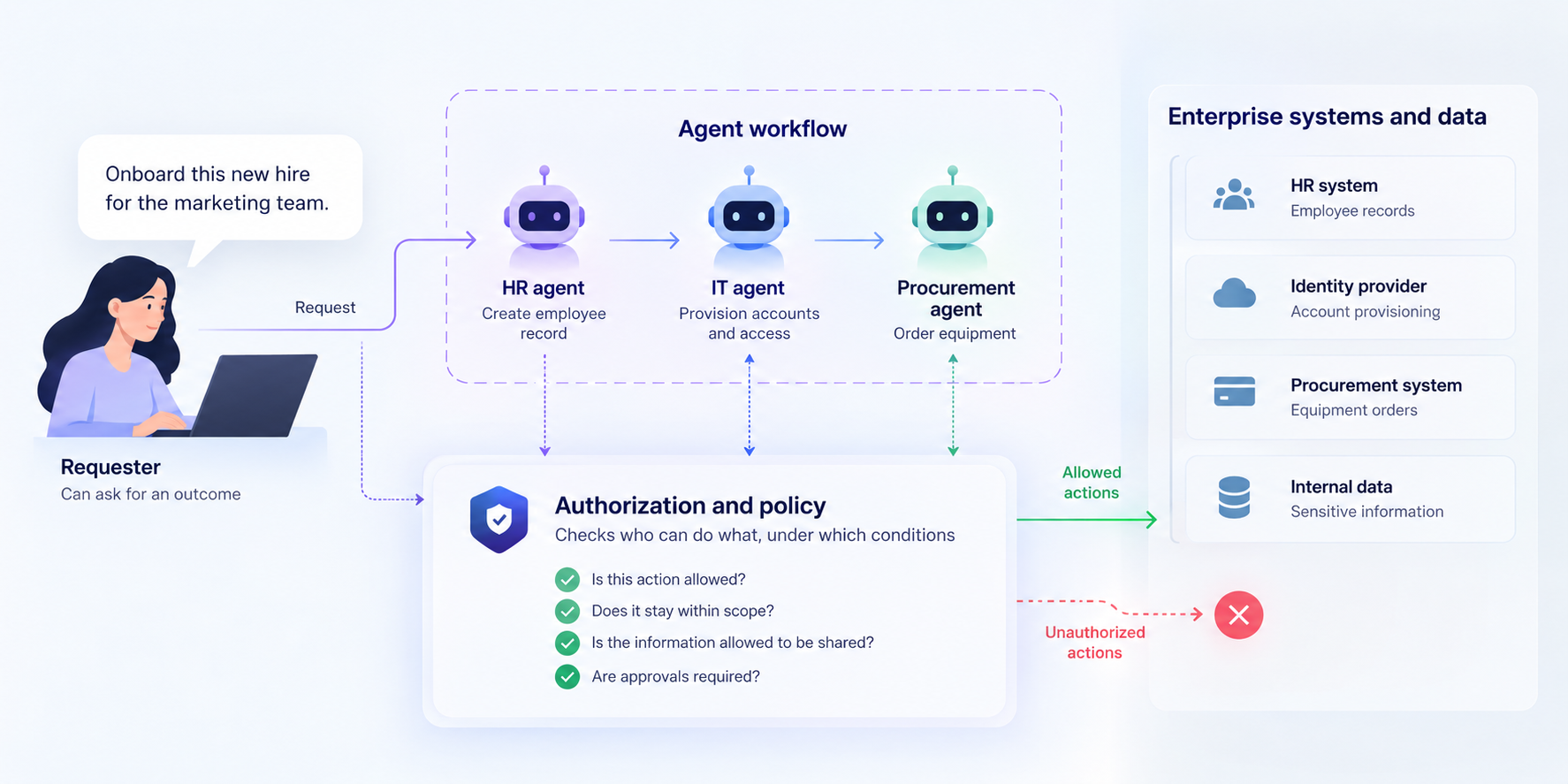
Put MCP servers and agent tools behind a central MCP registry and an MCP gateway. Approve each server and tool once, give every call the individual user's identity, retire shared API keys, and let clients reach only what's approved. This is also how you prevent agent sprawl.
Publish a plain-language acceptable use policy that says which data can go into which tools. Make clear that managers who quietly approve unapproved tools own that risk: in the Cybernews survey, 57% of employees using unapproved AI said their direct manager knew and supported it. See our guide to acceptable use policies for generative AI.
Log every AI tool call by person, agent, server, tool and values, following the practices in our guide to AI audit logs. Review the log and any blocked calls weekly at first. Run access reviews every quarter and remove servers and agents nobody owns. For the wider program, see AI agent governance.
Each control below stops a specific failure. Together they turn shadow connections into governed ones.
Credal is the MCP gateway and agent builder for enterprise AI. It governs the connection layer, where AI tools reach company systems. It does not replace the identity and network tools that discover personal AI apps. It gives you the approved path and the enforcement point for everything connected to company data:
See how Credal's MCP gateway works, compare options in our guide to the best MCP gateways for enterprises, or get a demo.
Shadow AI is the use of AI tools, connections or agents that the organization hasn't approved or doesn't know about, such as personal chatbot accounts, unreviewed MCP servers and agents built without IT oversight.
Company data can leave your control, unvetted tools can read and write business systems, and nobody can audit what happened. In IBM's 2026 study, 43% of breached organizations reported a shadow AI incident, and breaches involving shadow AI averaged $5.39 million.
Combine identity logs, OAuth grant reviews, network and endpoint data, expense reports and an employee survey. Tools such as Microsoft Defender for Cloud Apps and Okta for AI Agents cover parts of discovery.
Don't rely on bans. Find what's in use, provide approved tools that work better, govern connections through a registry and gateway such as Credal's, publish a clear policy and monitor usage.
A shadow MCP server is an MCP server that employees connect to an AI tool without IT review. It may use a shared API key, expose write actions or change its behavior after approval.
Use a central registry of approved servers and agents with named owners, route AI clients through a gateway, and review the audit log and access grants regularly. Credal's Agent Registry and MCP gateway are built for this.
Bans usually push usage out of sight. A better approach is to approve enterprise versions with the right data terms, connect them to company systems through governed servers, and block what falls outside policy.
Which data classes can go into which tools, who approves new tools and servers, how long approval takes, what employees must report, and what the consequences are for bypassing the process.
Shadow AI grows where approved tools are slow and visibility is low. Close the gap by finding what exists, giving people approved tools worth using, and controlling the connections between AI and company data with one registry, one gateway and one audit log. Credal is the MCP gateway and agent builder for enterprise AI.

One platform for all agents. Full visibility for admins, full access for teams.

One platform for all agents.
Full visibility for admins, full access for teams.