The best MCP gateway depends on where you run and what you must govern: AWS shops, Kong users, self-hosters and multi-tool enterprises each fit a different one. Amazon Bedrock AgentCore Gateway fits teams building on AWS, Kong AI Gateway fits teams already running Kong, Obot, IBM ContextForge and Microsoft MCP Gateway are open-source options for teams that want to self-host, Docker MCP Gateway suits developers running servers locally, and Credal (our product) fits companies that want one managed gateway with per-user identity, inherited permissions, human approvals and consolidated audit across Claude, ChatGPT, Cursor and their own apps.
This guide compares nine MCP gateways on identity, permissions, approvals, audit and deployment, using public vendor documentation. We chose them because they cover the main categories: managed governance platforms, cloud-provider services, API gateways with MCP features, self-hosted open source and developer tools. Others worth evaluating include Portkey, LiteLLM, the open-source agentgateway and Composio. We build Credal, so weigh our placement accordingly, and verify any detail that matters to your decision with each vendor. New to the category? Start with our guide to what an MCP gateway is.
Key takeaways
- Gateways are not interchangeable. Some are enterprise governance platforms, some are cloud-provider services, some are API gateways with MCP features, and some are developer tools.
- Start with your constraints. Cloud you already use, whether you must self-host, which AI clients employees use and whether AI will take write actions decide most of the shortlist.
- Ask about per-user identity and approvals. These are the capabilities that most often separate a production-grade gateway from a proxy.
- Verify pricing and compliance directly. Pricing tiers and compliance certifications change, so get current documents from each vendor.
How we evaluated MCP gateways
We used the criteria from our MCP gateway evaluation checklist, condensed to six questions:
- Identity: does every call map to a real user or registered agent through your identity provider, instead of a shared key?
- Permissions and policy: can you scope servers and tools by user or group, and are source-system permissions respected?
- Approvals: can sensitive writes require human approval before they run?
- Audit and observability: are tool calls logged with user, tool, inputs and outputs, and can logs reach your SIEM?
- Deployment: managed, in your cloud, Kubernetes or on-prem?
- Surfaces and scope: does it govern Claude, ChatGPT, Cursor and your own apps with one policy, and does it only proxy servers you already have, or also help you build governed ones?
Quick picks: the best MCP gateways by use case
- Best managed option for governing tool access across Claude, ChatGPT, Cursor and your own apps (our product): Credal.
- Best for AWS-based agent development: Amazon Bedrock AgentCore Gateway.
- Best if you already run Kong: Kong AI Gateway.
- Best open-source governance platform: Obot.
- Best open-source registry and proxy for federating MCP, A2A and REST: IBM ContextForge.
- Best for Kubernetes-hosted routing: Microsoft MCP Gateway.
- Best for developers running MCP servers locally: Docker MCP Gateway.
- Best for teams standardized on Cloudflare One: Cloudflare MCP server portals.
- Best for combined AI and MCP gateway needs: TrueFoundry.
1. Credal
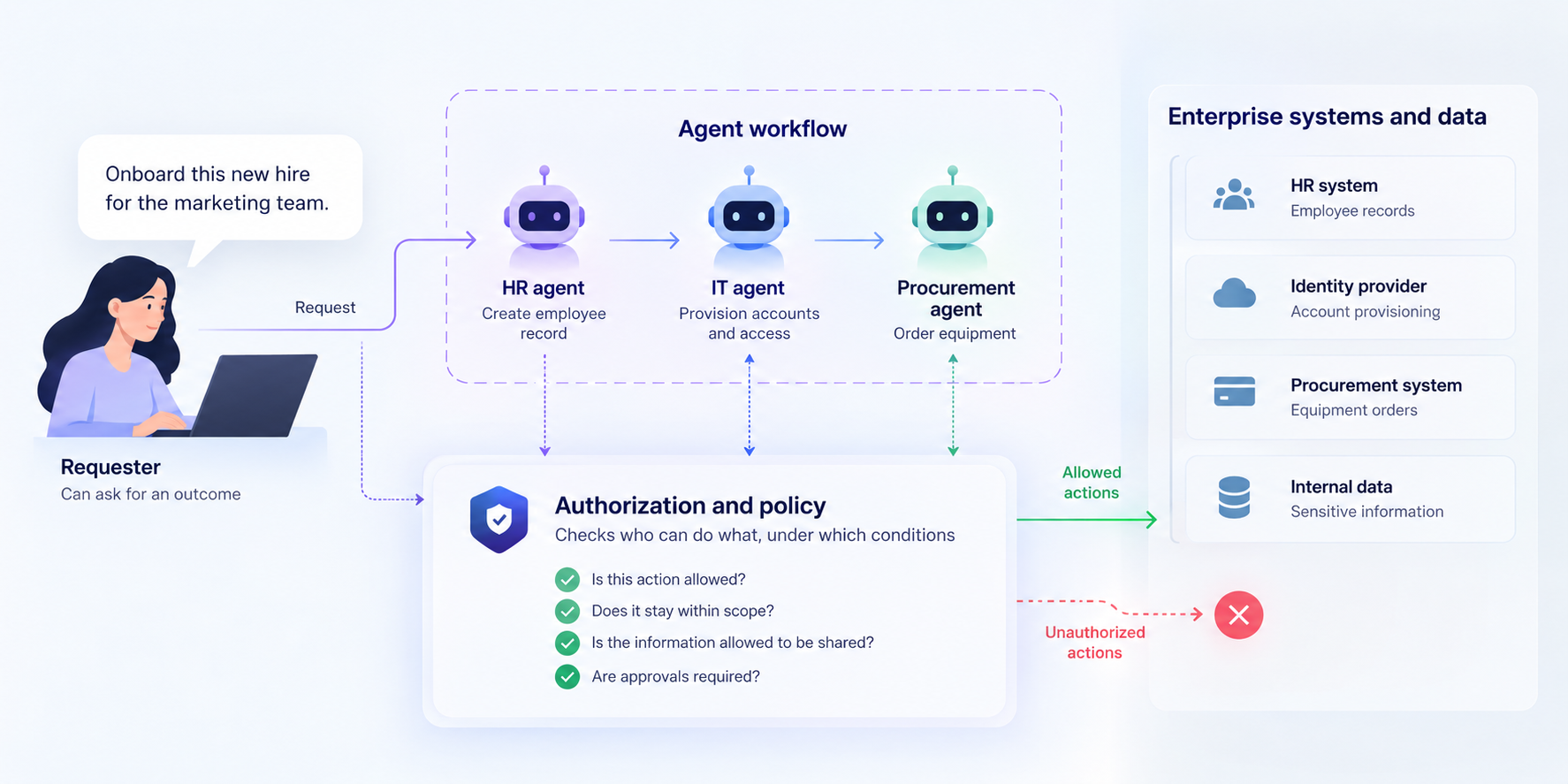
This section describes our own product. Credal's MCP Platform is an MCP gateway that sits between agents and your systems, so every tool call is tied to a user, checked against policy and logged.
- Best for: companies that want one governed gateway across Claude, ChatGPT, Cursor, Slack and their own apps.
- Identity and permissions: SAML/SSO and SCIM with providers like Okta provide user identity and group-based access, and permissions are inherited and continuously synced from source systems.
- Policy and approvals: scope servers, tools and actions to users, groups or calling agents, require human approval on sensitive writes and deny-list risky operations.
- Build governed servers: compose department-specific MCP servers from 1,000+ connectors and pre-built actions across Salesforce, Snowflake, Jira, Confluence, Zendesk, Google Drive and more.
- Audit: consolidated logs and cost analytics across every surface, with native Splunk integration and OpenTelemetry export.
- Deployment and compliance: multi-tenant cloud, managed single-tenant, cloud-prem and air-gapped on-prem options. SOC 2 Type II and HIPAA compliant, and Credal signs BAAs. See Credal security. An Agent Registry gives every agent an owner, approval chain, version history and access policy.
- Watch-outs and pricing: it is a commercial platform (managed or customer-hosted), not open source, so it is not the choice if you require a fully open-source stack. It focuses on governing tool and data access for AI agents, not on model-serving infrastructure. Credal offers custom pricing based on each enterprise's needs; see pricing.
2. Amazon Bedrock AgentCore Gateway
AWS describes AgentCore Gateway as a fully managed service that gives agents a single, secure entry point to tools, other agents and models.
- Best for: teams building agents on AWS that want a managed, serverless gateway.
- Strengths: converts OpenAPI, Smithy and Lambda targets into MCP-compatible tools, handles inbound and outbound authentication including OAuth flows, offers fine-grained access control and rules on the gateway, semantic tool search, agent-to-agent passthrough and model routing, and includes built-in observability and auditing. It lists one-click integrations for tools such as Salesforce, Slack, Jira, Asana and Zendesk.
- Watch-outs: it is an AWS service, so it fits best when your agents and systems already live on AWS. Check how it handles approval workflows and consolidated audit across non-AWS AI clients.
- Pricing: usage-based through AWS. Check current AWS pricing.
3. Kong AI Gateway
Kong extends its API gateway to proxy and govern MCP traffic, applying policies for security, governance and observability.
- Best for: organizations that already use Kong for APIs and want MCP governed in the same place.
- Strengths: Kong documents authentication for AI consumers (including OpenID Connect), an MCP OAuth2 plugin for token validation (Enterprise tier, and in tech preview at the time of writing), ACLs on MCP tool usage by consumer group, rate limiting on MCP traffic and OpenTelemetry-based monitoring. It can wrap MCP servers you already run, and Kong describes bundling several servers behind one route so callers see only the tools they are authorized to use.
- Watch-outs: it comes from an API-management background, so confirm per-user identity into source systems, human approval on writes and AI-specific guardrails rather than assuming API-gateway features cover them.
- Pricing: the MCP OAuth2 plugin requires Kong's AI Gateway Enterprise tier. Check Kong's pricing for the rest.
4. Obot
Obot is an open-source platform (MIT license) for managing, securing and governing AI tools, with an MCP gateway at its core.
- Best for: teams that want an open-source governance platform they can run on their own infrastructure.
- Strengths: virtual MCP servers that combine catalog servers behind one endpoint, access control by user or identity-provider group, Okta SCIM provisioning, request and response filtering, hosted MCP servers on Docker or Kubernetes, an LLM gateway, and audit logs correlated across MCP and model traffic.
- Watch-outs: self-hosting means you operate it, and the project says Kubernetes is the route for production. Some capabilities, such as device management, are marked beta or experimental. Per Obot's docs, air-gapped installs cannot yet validate Enterprise license keys.
- Pricing: Obot says its Community and Enterprise editions run the same code and differ by license key, user and device limits. Community is free for up to 100 users and 100 devices, Okta and Entra sign-in needs free registration or an Enterprise key, and support is Enterprise only. Check Obot's editions page.
5. IBM ContextForge
ContextForge is an open-source (Apache-2.0) registry and proxy that federates MCP servers, A2A servers and REST or gRPC APIs behind one endpoint, with centralized governance, discovery and observability.
- Best for: platform teams that want to self-host and customize a federated gateway across MCP, A2A and REST.
- Strengths: federation across multiple servers and APIs, plugin support, distributed tracing, and deployment through PyPI or Docker, scaling to multi-cluster Kubernetes with Redis-backed caching.
- Watch-outs: it is an open-source project you run yourself, and it releases frequently, so check the current release notes and security guidance before deploying. Confirm the support model, and test how it handles per-user identity into source systems and human approvals before relying on it.
- Pricing: free to license. You pay for hosting and operations.
6. Microsoft MCP Gateway
Microsoft's open-source (MIT) MCP Gateway is a reverse proxy and management layer for MCP servers, with stateless request routing, Entra ID-based authorization and lifecycle management of MCP servers in Kubernetes environments.
- Best for: Kubernetes-centric teams, especially on Azure, that need to route and manage MCP servers at scale.
- Watch-outs: its documented focus is routing, authorization and server lifecycle. Approval workflows, source-system permission inheritance and consolidated audit across AI clients are not documented, so check what you would have to build around it.
- Pricing: open source. You pay for infrastructure and operations.
7. Docker MCP Gateway
The Docker MCP Gateway (MIT license) powers Docker's MCP Toolkit. It runs MCP servers as isolated containers and gives AI clients one gateway to reach them.
- Best for: developers and small teams who want to run and share MCP servers safely from a catalog.
- Strengths: container isolation per server, secrets management, built-in OAuth flows, shareable profiles, per-tool allowlists, and logging and call tracing.
- Watch-outs: the documented scope is running and configuring servers. For company-wide identity, approvals and audit, evaluate what you would need to add.
- Pricing: the gateway is open source. It works with Docker Desktop, so check Docker's licensing for your team size.
8. Cloudflare MCP server portals
Cloudflare offers MCP server portals as part of the access controls in Cloudflare One, its Zero Trust platform.
- Best for: organizations already standardized on Cloudflare One that want MCP access to follow the same Zero Trust policies.
- Strengths: Cloudflare Access policies decide who can reach a portal and which servers appear for each user, you can curate the tools each portal exposes, and portal traffic can be routed through Cloudflare Gateway so DLP policies can inspect what goes to upstream MCP servers. Portal activity logs can be exported to a SIEM with Logpush.
- Watch-outs: it is part of a network security platform, so check how far it goes on per-tool approvals and server building. Cloudflare's docs say DLP AI prompt profiles do not apply to portal traffic, and its changelog has described portals as both beta and generally available, so confirm current availability and plan requirements.
- Pricing: part of Cloudflare One. Per Cloudflare's docs, Logpush export of portal logs is available on Enterprise plans only. Check current plans.
9. TrueFoundry
TrueFoundry combines an AI gateway for model traffic with an MCP gateway, aimed at teams that want one platform for both.
- Best for: platform teams that want model routing and MCP governance in one product.
- Strengths: TrueFoundry's own MCP gateway page describes federated login through Okta, Azure AD and other identity providers, role-based access control per MCP server, and a registry that discovers registered tools. The company says it can run in a VPC, on-prem, air-gapped or across clouds.
- Watch-outs: the access approvals it describes are role-based. We did not find documented human approval of individual tool calls, so verify that if you need it. Published reviews disagree on which tier includes VPC or on-prem deployment, so ask for the SOC 2 report.
- Pricing: TrueFoundry has a free tier, but sources disagree on its limits and on plan prices, so check its pricing page and get a current quote.
Which MCP gateway should you choose?
- Employees use several AI tools and AI will write to business systems: prioritize per-user identity, inherited permissions, approvals and consolidated audit across surfaces. Credal is built around those.
- You are an AWS shop building agents: start with AgentCore Gateway and check where you need more governance.
- You already run Kong or Cloudflare One: extending what you have is the lowest-friction path. Test it against the evaluation questions above.
- You must self-host on open source: shortlist Obot, IBM ContextForge and Microsoft MCP Gateway, and budget for operating them.
- You are a small team experimenting: Docker MCP Gateway is a low-cost way to run servers safely while you learn.
- You are in a regulated industry: filter first on deployment options, audit export and current compliance reports, then compare features.
Questions to ask every MCP gateway vendor
- Does every tool call carry the individual user's identity into the downstream system, or does it use a shared service account?
- Can we require human approval on specific tools or conditions, and deny-list operations entirely?
- What exactly is logged, and can we export it to our SIEM?
- How do you detect when an approved server's tools change after approval?
- Which deployment models do you support, and what compliance reports can you share today? See also MCP vs API security.
Want to see how Credal answers these on your stack? Get a demo. Vendor details change quickly, and this comparison reflects public documentation we reviewed in November 2026.
Frequently asked questions
What is the best MCP gateway for enterprises?
There is no single best option. For governance across many AI tools with per-user identity, approvals and consolidated audit, a platform like Credal fits. AWS teams often start with AgentCore Gateway, Kong customers with Kong AI Gateway, and teams that must self-host look at Obot, IBM ContextForge or Microsoft MCP Gateway.
Are there open-source MCP gateways?
Yes. Obot (MIT), IBM ContextForge (Apache-2.0), Microsoft MCP Gateway (MIT) and Docker MCP Gateway (MIT) are open source. You pay for hosting and operations, and some projects, such as Obot, price enterprise tiers, support and scale limits separately. Features such as approvals and compliance evidence vary.
Which MCP gateways let you require human approval before an agent writes to a system like Salesforce?
Credal supports human approval on sensitive actions and deny-lists for risky operations. For other gateways, we did not confirm native per-tool human approval in the public docs we reviewed, so verify before assuming it exists. Obot, for example, offers request filters that can reject calls.
What is the difference between an MCP gateway and an API gateway?
An API gateway manages service-to-service REST or gRPC traffic. An MCP gateway governs how AI clients call tools: identity, tool access, approvals and tool-call audit. Some API gateways now add MCP features. See also what an agent gateway is.
Which MCP gateways are HIPAA compliant?
Ask each vendor for current SOC 2 Type II reports and whether it will sign a BAA. Credal is SOC 2 Type II and HIPAA compliant and signs BAAs. Open-source gateways leave compliance to the organization that runs them.
How much does an MCP gateway cost?
Most open-source gateways cost nothing to license, though some (such as Obot) price enterprise tiers, support and scale limits separately, and all require engineering time to host, secure and maintain. Managed gateways price by usage, seats or enterprise contract. Compare the total cost, including operations, for your number of users and tool calls.
Do I need an MCP gateway if I only use Claude Enterprise or ChatGPT Enterprise?
Each vendor's admin controls cover only its own app. If employees use more than one AI tool, or you need per-team permissions, approvals on writes and one audit trail, a gateway gives consistent control. Read the full MCP gateway guide.