An MCP gateway constitutes a necessary architectural layer for scaling MCP client-server communications. Without such a gateway, every MCP client must independently negotiate authentication, logging, and routing with each server, producing redundant logic, inconsistent error handling, and fragmented security controls.
Without a central enforcement point upholding zero-trust principles, MCP traffic between clients and servers would produce inconsistent permissions, missed audit logs, and unverified tool sources.
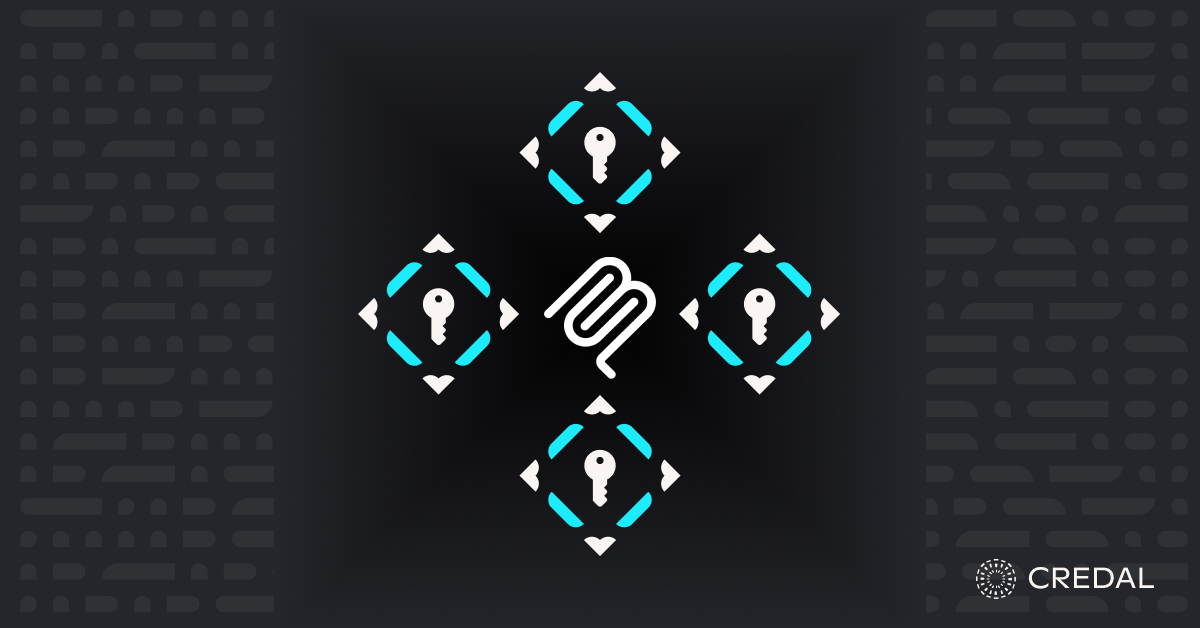
An MCP gateway is a critical layer that sits between MCP clients (agents, IDEs, internal apps) and MCP servers, proxying every request and acting as the single enforcement point for auth, policy, and observability across the MCP ecosystem. It is similar to an agent gateway but is more broadly applicable to any AI-integrated process.
Model Context Protocol is undeniably the industry standard for how agents connect to tools, data, and systems. However, the protocol’s scope does not cover specifics for authentication/authorization, logging, routing, and other areas that are required for any production deployment. This is not a design flaw; MCP is intentionally open-ended, much as HTTP defines transport mechanics without prescribing application-layer strategy. It provides the structural foundation, not the governance framework required to scale MCP deployments.
This quickly becomes difficult as companies employ more and more MCP client-server interactions. If your organization has M number of MCP clients actively operating, and each of them is connecting to N number of MCP servers, managing each of those connections becomes an O(M×N) problem. This growth produces a bottleneck not in network throughput, but in configuration management and governance overhead. Without one consistent layer, internal systems could be vulnerable to untrusted MCP servers, compromised systems, or supply chain attacks through third-party connectors.
The MCP threat surface is notably broad. Documented attack categories include untrusted tool definitions (commonly referred to as tool poisoning), fake or impersonated MCP servers, and attack vectors introduced through compromised third-party connectors.
Numerous solutions position themselves as MCP gateways. While individual products differentiate across varying dimensions, several capabilities define a production-grade MCP gateway.
Before an MCP client can access an MCP server's services, the gateway must validate that the client is both an identifiable entity and holds the appropriate permissions, typically established via OAuth 2.0 flows. Permissions should always mirror (or be stricter than) source systems, following least-privilege principles. These identities are crucial to observability as audit logs need them to be traceable.
Where does the MCP gateway fit in? It must validate both client identities and server identities or proxy their identities. Regardless of implementation approach, the MCP gateway's role extends beyond facilitating authentication or authorization between individual parties; it serves as the definitive enforcement point determining which clients and servers are permitted to transact within the MCP ecosystem.
Prompt injection remains among the OWASP Top 10 security risks for LLMs operating within the MCP paradigm. Mitigating such attacks requires that every tool definition, user input, external document, and tool response be scanned and sanitized before processing. Because the gateway is the conduit through which MCP interactions occur, the duty falls on it.
Sanitization at the gateway level encompasses several dimensions. At a baseline, it mirrors protections found in conventional data sanitization contexts, such as SQL injection defenses: stripping escape characters and blocking embedded shell scripts. However, because LLMs are susceptible to adversarial natural language, the MCP gateway must also identify and block instructions designed to override system prompts or subvert intended agent behavior. The gateway should also scan for sensitive information that might be leaked via an outbound response, functioning similarly to a data loss prevention (DLP) layer.
Observability is critical for enterprises across several dimensions. The first is legal: most organizations pledge to enterprise compliance standards that require observability practices. The second is security: observability allows engineers to pinpoint potential exploits. Finally, observability is essential for detecting and mitigating agent misuse or runaway execution, scenarios in which agents operate outside intended parameters and consume potentially millions of tokens.
audit logs. While most MCP servers have built-in observability, and many MCP client processes as well, the MCP gateway should also monitor every MCP request, tracking the client, the server, the tools invoked, the inputs, the outputs, and the timestamp.
Beyond authorization and observability, MCP gateways enforce operational policies that govern agent runtimes and protect business processes. For example, a gateway policy may require human-in-the-loop approval before executing sensitive action sequences, or impose rate limits on tool invocations within a defined time window to prevent runaway agent loops that could exhaust resources or trigger unintended downstream effects. Additionally, MCP gateways might allowlist or block certain MCP servers for specific teams at the gateway level, without relying strictly on authorization.
As organizations deploy an increasing number of agents across business functions, backend MCP servers face corresponding increases in request volume. An MCP gateway addresses this by distributing requests through load balancing across upstream MCP servers, preventing any single server from becoming a performance bottleneck and ensuring consistent service availability for dependent workflows.
An MCP gateway needs to account for a lot of considerations. For organizations with substantial investments in coding agents, the prospect of building a homegrown gateway solution may appear tractable. However, given the breadth of compliance, security, observability, and scalability requirements that a production-grade gateway must satisfy, most enterprises elect to adopt a purpose-built platform such as Credal.
Credal is an MCP gateway with SAML/SSO with all major IdPs, tying every MCP request to an identifiable user. It also has 1-to-1 permission mirroring with source systems, ensuring that agents cannot be used as a vector to side-step access or enable lateral movement across connected systems. Credal has powerful sanitization, with scanning for sensitive data in outbound responses, schema-level access policies, customer-uploaded acceptable use policies, global rules (email approvals, payment caps, blocked operations), and a product oriented around OWASP MCP risks. Most Credal customers use the product to reach SOC 2 Type II and HIPAA compliance while pairing audit log data with their preexisting observability stack.

One platform for all agents. Full visibility for admins, full access for teams.

One platform for all agents.
Full visibility for admins, full access for teams.